
Manaslu Circuit Trek: A 14-Day Itinerary & Complete Guide
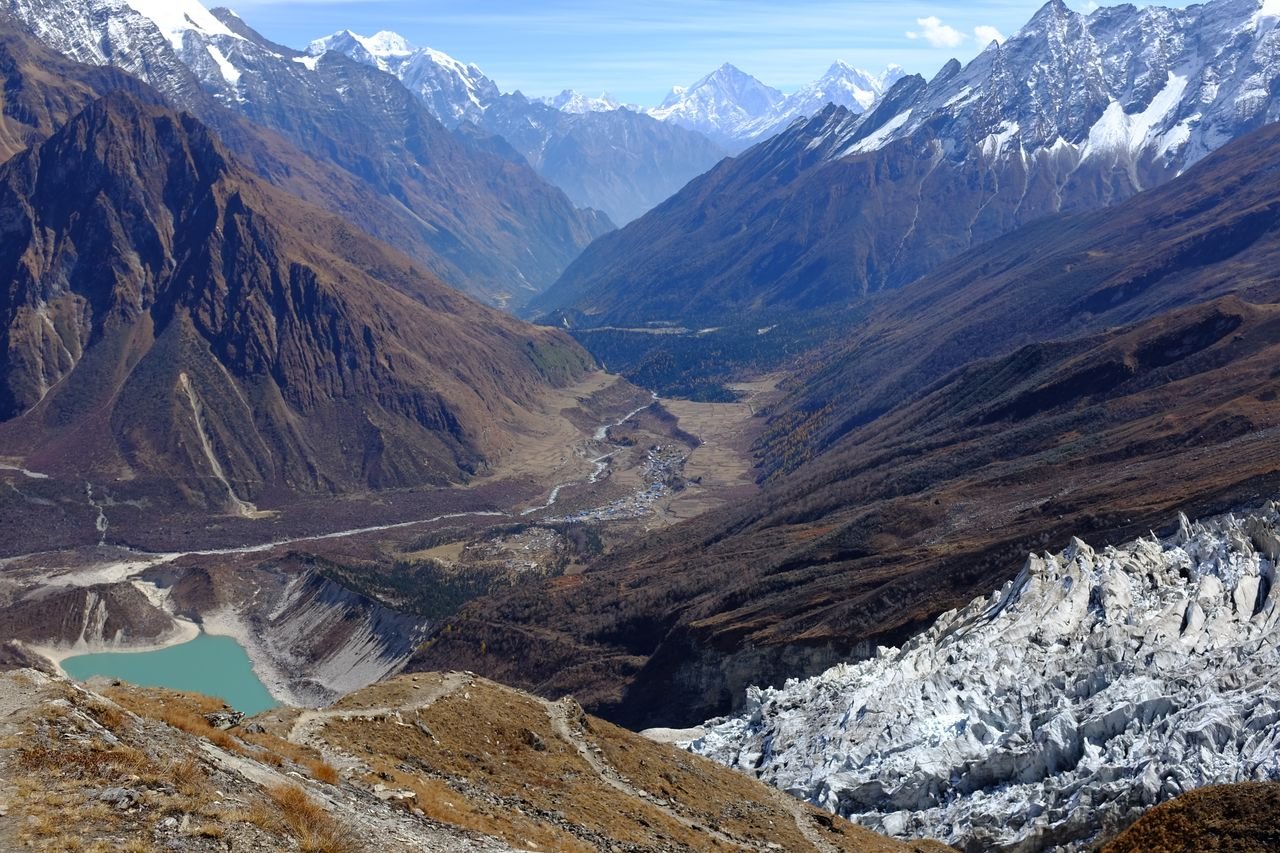
The 14-Day Itinerary
Day 1: Arrival in Kathmandu (1,400 m)
Day 2: Drive from Kathmandu to Soti Khola (710 m)
Day 3: Trek from Soti Khola to Machhakhola (870 m)
Day 4: Trek from Machhakhola to Jagat (1,340 m)
Day 5: Trek from Jagat to Deng (1,860 m)
Day 6: Trek from Deng to Namrung (2,630 m)
Day 7: Trek from Namrung to Samagaon (3,520 m)
Day 8: Acclimatization Day in Samagaon (3,520 m)
Day 9: Trek from Samagaon to Samdo (3,860 m)
Day 10: Trek from Samdo to Dharmasala (Larkya Phedi) (4,460 m)
Day 11: Cross Larkya La Pass (5,160 m) and Trek to Bimthang (3,720 m)
Day 12: Trek from Bimthang to Tilije (2,300 m)
Day 13: Trek from Tilije to Dharapani (1,960 m) and Drive to Kathmandu
Day 14: Departure from Kathmandu (1,400 m)
Essential Information About the Manaslu Trek
Permits and Regulations
The Manaslu Circuit is in a restricted area, and the regulations are strict. You cannot trek independently.
Mandatory Guide: The Nepali government requires all trekkers to hire a government-licensed guide. This is for safety and to manage the remote region .
Group Size: While you used to need a minimum of two trekkers, under the 2026 rule update, a single trekker can obtain a permit, but the guide requirement is absolute .
Permits Required:Manaslu Restricted Area Permit (RAP): The primary permit, costing USD 100 per week for the first 7 days and USD 15 per extra day during the peak autumn season .
Manaslu Conservation Area Project (MCAP) Permit: Required for entering the conservation area .
Annapurna Conservation Area Project (ACAP) Permit: Required for the final section of the trek as you exit via the Annapurna region
Best Time to Trek
he best seasons are spring (March to May) and autumn (late September to November) .
Autumn: Considered the premier time for stable weather and crystal-clear mountain views.
Spring: The second-best season, featuring blooming rhododendrons in the lower valleys, though visibility can be slightly hazier.
Difficulty and Preparation
The Manaslu Circuit is considered more challenging than many other classic treks .
Terrain & Altitude: The route involves steep ascents and descents, rugged trails, and the crossing of the high altitude Larkya La Pass (5,160 m) . You trek through multiple climatic zones, from humid subtropics to arctic conditions at the pass .
Acclimatization: Proper acclimatization is crucial. The itinerary includes a dedicated rest day in Samagaon, but you must also pace yourself, stay hydrated, and know the symptoms of altitude sickness .
Fitness: A good level of physical fitness is essential. Daily walks of 6-8 hours over varied terrain require stamina and mental resilience
Practical Tips
Cash is King: There are no ATMs beyond the early stages of the trek. Carry sufficient Nepali rupees from Kathmandu to cover all expenses (food, drinks, hot showers, tips) .
Teahouse Accommodation: Lodging is basic but warm and hospitable. Facilities become more primitive at higher altitudes, with shared bathrooms and limited hot water .
Pack Warm: At Dharamsala and Samdo, nighttime temperatures can drop to between -10°C and -15°C in autumn. A high-quality sleeping bag is non-negotiable .
Travel Insurance: Your insurance policy must cover high-altitude trekking up to 5,500m and include helicopter evacuation